👩🍳 Kitchen
Walking around town makes Lily hungry, and the kitchen at home is where she gets her energy back. The kitchen is simple on purpose: big picture buttons, one tap per treat, and Lily says thank you.
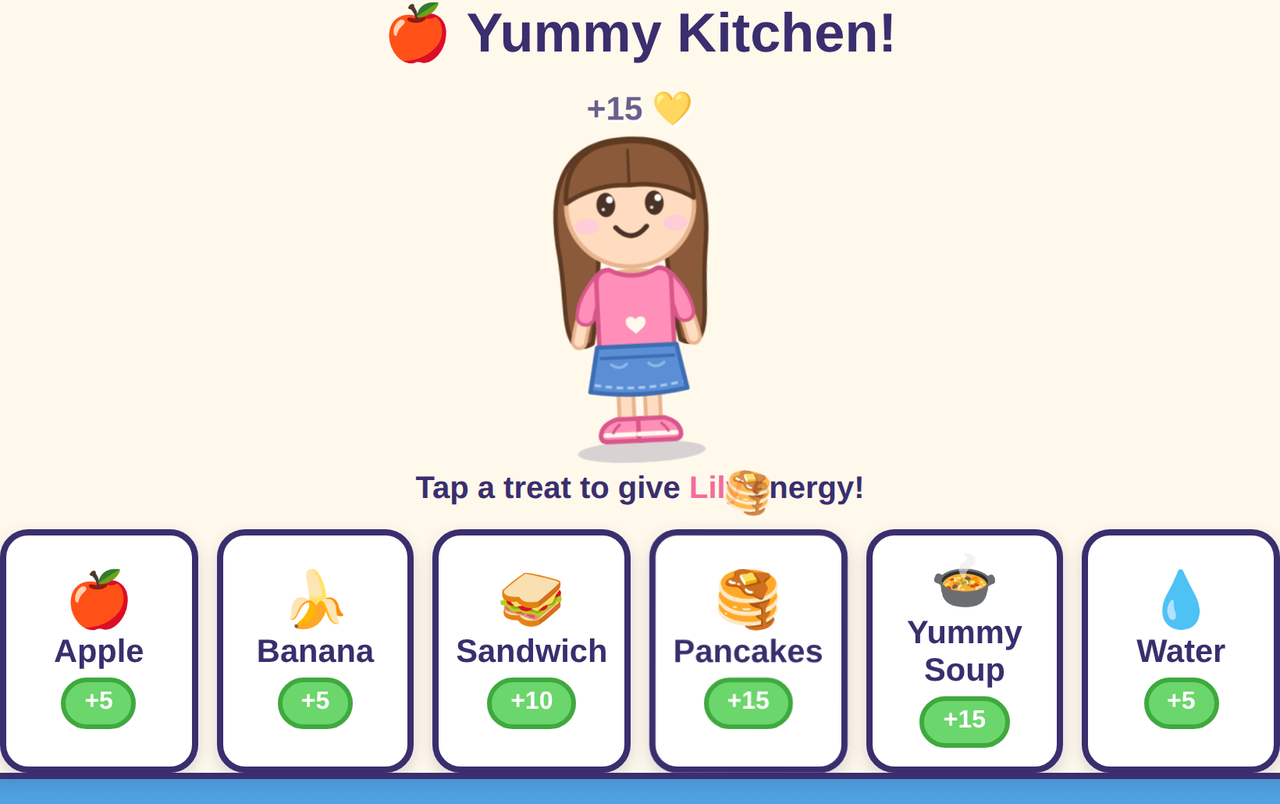
The menu
| Food or drink | Energy |
|---|---|
| 🍎 Apple | +5 |
| 🍌 Banana | +5 |
| 🥪 Sandwich | +10 |
| 🥞 Pancakes | +15 |
| 🍲 Yummy Soup | +15 |
| 💧 Water | +5 |
| 🧃 Juice | +10 |
| 🥤 Smoothie | +10 |
How energy works
Lily has an energy bar on screen. Walking to places on the town map uses a little energy — a short walk to the Park costs less than the long walk to the Beach or Grandma's house. When the bar runs low, Lily says she's hungry, and a trip home to the kitchen fills it up again. Food never costs anything and there is no way to run out of it.
For young children this is a gentle first taste of planning: "we want to go to the beach, and that's far, so let's have pancakes first." Nothing bad happens if they forget — Lily simply asks for a snack.
What children practise here
- Counting and comparing: pancakes give more energy than an apple. Older children like to work out how many apples make one bowl of soup.
- Food words and categories: fruit, meals and drinks, and a natural moment to talk about what they like to eat themselves.
- Taking care of someone: the game frames eating as looking after Lily, which younger players take very seriously.
Ideas for playing together
- Plan a day out: pick three places on the map and decide what Lily should eat before leaving.
- Ask which snack your child would choose for themselves — and whether Lily agrees.
- After playing, make one of the menu items together in your real kitchen.